
May 11th, 2026
Spring 2026 Virtual Ranch Management Recap
Location and Date: Virtual, March and April 2026
It’s hard to believe we are already in the third year of Women in Ranching’s Virtual Ranch Management offerings! What started as a way for me (Caroline) to share my passion and knowledge about enterprise analysis and accounting has blossomed into something larger than financial topics. As we grew the series I knew that I wanted to attempt to keep some seasonality to the topics, so this spring I invited my friends at Noble Research Institute to lead two sessions covering small ruminant grazing and the business case for better grazing practices.
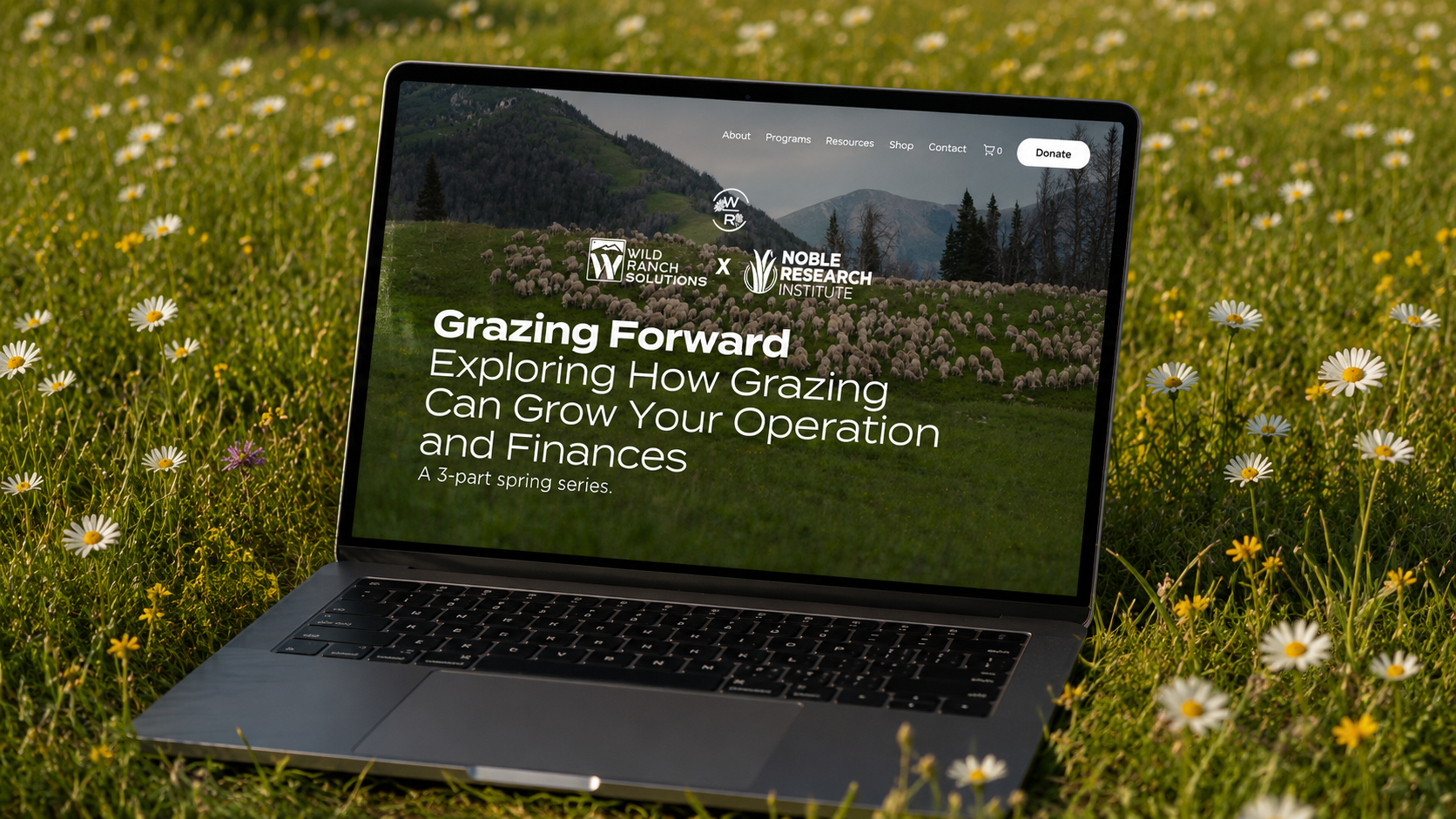
We had 38 ladies register for Grazing Forward: Exploring How Grazing Can Grow Your Operation and Finances and join us virtually over a three week period. Josie Morris led our first session and shared her journey raising small ruminants in Oklahoma and some of the management practices she employs to make sure she is regeneratively grazing while also growing great sheep and goats! Caitlin Word led our second session about the business case for better grazing and why investing a little in your grazing infrastructure can help your long term bottom line! I was excited to lead the last session about looking at your raised hay cost, and how your profit might change with buying hay and utilizing hay ground differently.
My favorite part of the virtual ranch management series is the diversity of participants that a digital platform allows. We had ladies joining from California and Vermont, Montana and Oklahoma, and each participant had a different reality which makes the conversations dynamic and lively!
This was our first virtual session dedicated specifically to a small ruminant topic, and I have to say, I was so thrilled with the excitement and enthusiasm for hearing Josie’s story! I know that sometimes cows take precedence over sheep and goats in programming spaces, but our Women in Ranching audience includes many proud small ruminant producers. It was a goal of this series to highlight their importance. Women in Ranching aims to broaden the audience of women’s work and impact while providing accessible learning opportunities for rural leaders and I can proudly say that we furthered that goal through our spring Virtual Ranch Management series for 2026!
— Caroline Wild, WIR Financial Educator