Rooted to Rise: Women Pastoralists, Shared Ground and a Global Vision
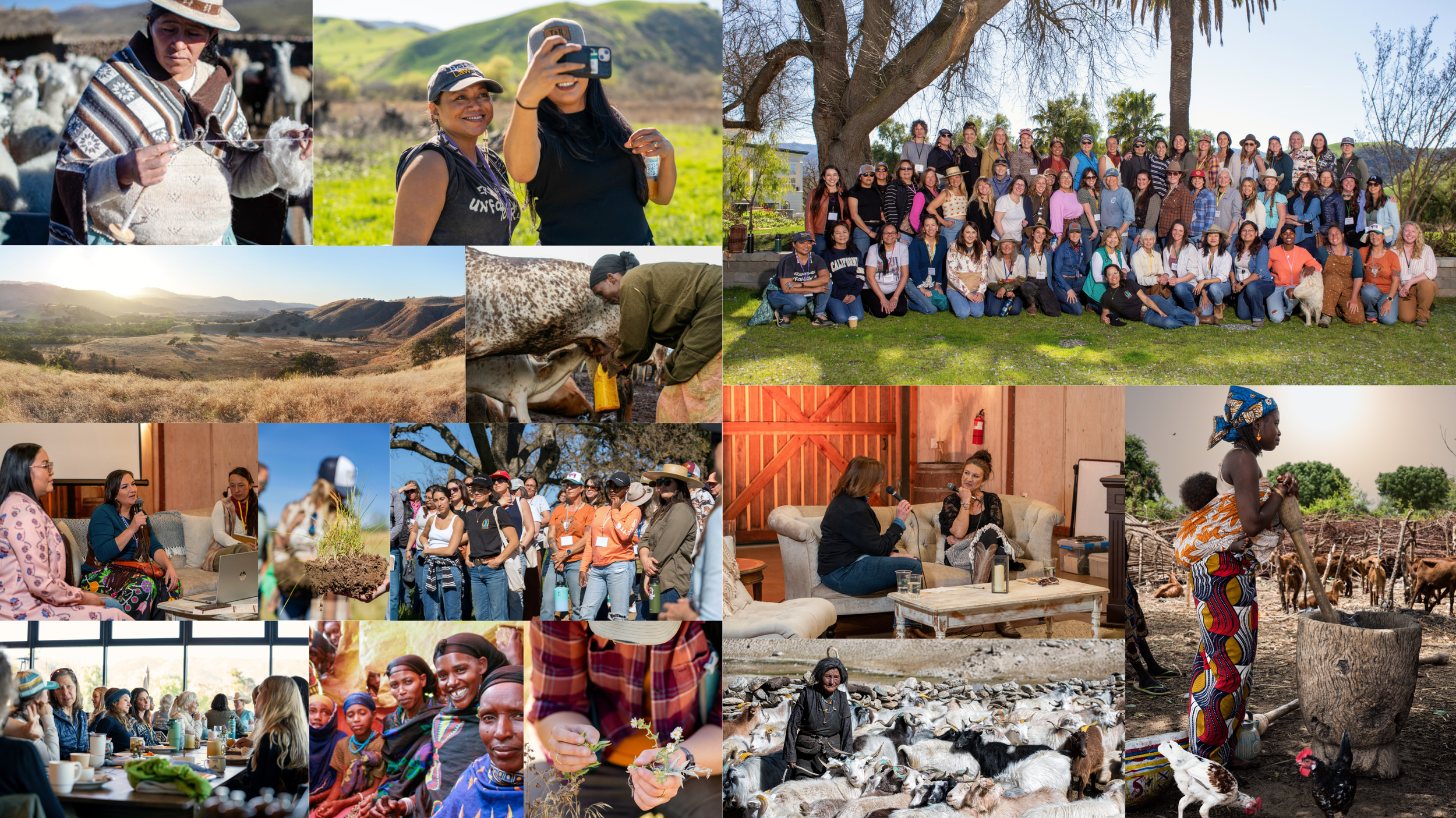
Women who steward lands across the globe, whether on rangelands in the American West or grasslands halfway around the world, share more with one another than distance would suggest. This work is shaped by responsibility, relationships, and decisions made in places where land and livelihood are inseparable. Too often, the contributions of women remain unseen.
María Fernandez-Gimenez, a retired professor of rangeland ecology and management, has worked alongside ranchers and pastoralists across continents, blending ecology with anthropology and lived experience for more than 30 years.
That dual lens has shaped her career, and now she’s helping to organize a global effort, focused on making women pastoralists visible, supported, and heard.
Fernandez is a co-coordinator of the Working Group on Pastoralism and Gender, part of the global alliance behind the International Year of Rangelands and Pastoralists, a United Nations–designated initiative years in the making. The U.S., she noted, played a key role in advancing the designation, with leadership from the Society for Range Management. But the proposal itself was brought forward by the Government of Mongolia, where Fernandez has worked since the early 1990s.
Once the designation became official, she said, “this global alliance… sort of kicked into high gear.” Volunteers from academia, development, conservation, and pastoralist communities came together around the shared concern of the future of rangelands and the people who depend on them.
One of the 12 monthly themes of the International Year is women pastoralists, a focus that aligned seamlessly with Fernandez’s work. “I knew that I wanted to stay engaged professionally and that my priorities were to support women pastoralists and Indigenous peoples in rangelands around the world,” she said. “My research towards the end of my career was focused on pastoralist women.”
Across every system she has worked in from the United States to Mongolia to Morocco, one pattern repeats. “In all of them, women play really important roles and tend to be unrecognized and less supported and not have the same voice in decisions that affect them personally, that affect their families, that affect their communities and their land.”
That reality is what drives the Pastoralism and Gender Working Group, and its 2026 effort of a Global Gathering of Pastoralist Women.
A Network of Networks
The idea builds on a landmark gathering held in 2010 in Mera, India, which produced a declaration outlining women pastoralists’ priorities. “Maybe it’s time for us to reconvene a gathering, revisit this declaration, see what progress has been made,” Fernandez recalled. “Are women pastoralists’ challenges and priorities the same now? Are they different?”
This May, the Group will gather women representing each region of the world in Kathmandu Nepal, to facilitate knowledge exchange, identify priorities for pastoralist women and their networks, and much more.
What excites Fernandez most is the impact and ripple effect that connecting women locally and globally can have. “One of the four goals of the global gathering is to explore the potential to build a global network of pastoralist women, a network of networks.”
For women in places where no formal organizations yet exist, that exposure can be transformative. Fernandez has seen it firsthand through her work with Ganaderas en Red, a network of women pastoralists in Spain. “People time and again told me how this had changed their life,” she said. “All of a sudden they felt like they weren’t alone.”
That sense of belonging led to something larger. The women began telling their own stories, producing videos and films, developing a manifesto, and showing up consistently in spaces where they had not been invited in the past. “Now there’s never any excuse for the government, for industry organizations, for research entities… to organize something that has to do with extensive livestock grazing and management and not include pastoralist women,” Fernandez said. “There’s no excuse because this network exists.”
Where Land Meets Vision
As Women in Ranching prepares for its annual Confluence, this year’s theme, Rooted to Rise: Where Land Meets Vision, reflects a growing commitment to global connection. The International Year of Rangelands and Pastoralists offers a powerful backdrop for that expansion.
The Confluence is part of a wider constellation of regional gatherings feeding into the global effort from South Asia to Mongolia, Mexico to Europe, and North America. Each creates space for women to articulate what matters most where they live. “All of those are venues where women pastoralists are talking about what are the issues that are most important to them,” Fernandez said.
Those issues are wide-ranging but deeply familiar to ranching women everywhere: political representation, safety, access to land and resources, climate resilience, cultural continuity, youth succession, and the daily realities of sustaining livelihoods on working landscapes.
And yet, as one working group member reminded the collective, there is both unity and diversity. “Yes, we want to identify the common themes, but let’s not forget the rare flowers, the unique experiences, the diversity that we represent.”
A Call to Rise Together
For Fernandez, success isn’t measured only in policy outcomes. “If you have 100 women there,” she said of the global gathering, “it’s going to make a lasting impact on them.” Each participant commits to bringing what she learns back to her community, creating ripples that extend far beyond a single event.
January, 2026
Registration for the 2026 Women in Ranching Confluence, Rooted to Rise: Where Land Meets Vision, is open.
Join us, and be part of a growing global movement of women shaping the future of rangelands.
IYRP Pastoralism & Gender Working Group
If you’d like to support the IYRP Pastoralism and Gender Working Group gathering in Kathmandu, Nepal, your contribution will cover essential costs, help create a global network of pastoralist women, support the participation of pastoralist women in global decision-making processes on climate and environment, and allow the group to offer scholarships to those who need them.