


Women in Ranching’s Leading with Numbers Cohort is designed to support women in agriculture as they pursue meaningful, achievable financial and operational goals.
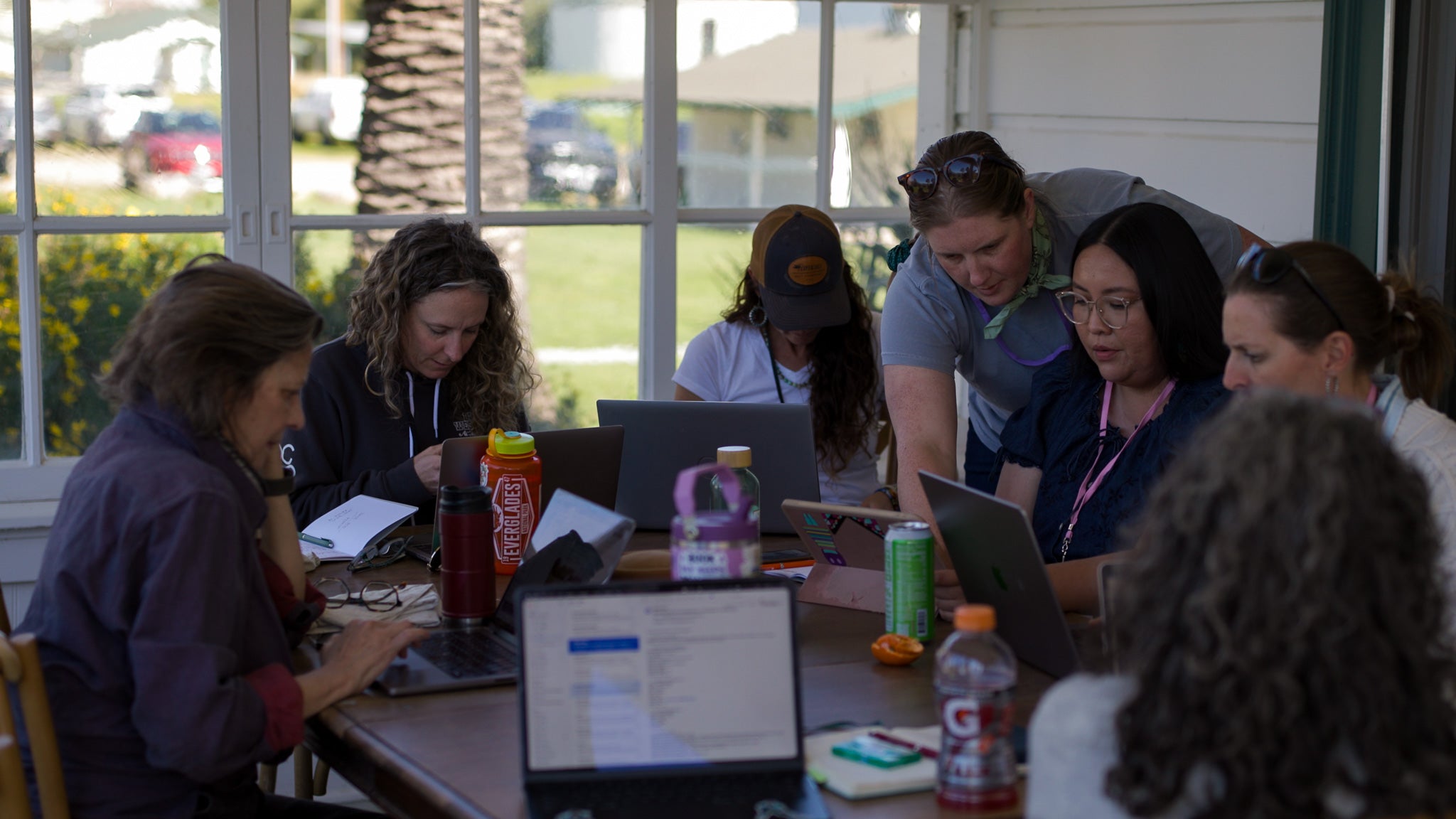
Over the course of 10 weeks, this cohort of 10 women will gather virtually to learn, receive support and mentorship, build relationships, and work towards financial clarity for their operations.
Our cohort is designed to provide participants with weekly financial lessons, work sessions, and community support opportunities that will have a lasting impact on their business. Research has shown that when we make change in community, instead of in isolation, that change has a much stronger likelihood of becoming a sustained habit.

To participate in the cohort you must
✓ Actively steward land and livestock
✓ Actively use a financial software platform for your business (typically Quickbooks or Ambrook)
✓ Have an active subscription to a financial software program (such as Quickbooks or Ambrook) with transactions populated from all of 2026 and bank accounts and credit cards linked.
✓ Be keeping production data available from 2026
- This includes sales slips, calving records, processing sheets, hay production, how many head you retained for replacements versus sold at auction versus kept for meat, etc. (There will be time to gather this during the cohort).
✓ Have access to a computer with Google Sheets or Excel, and be comfortable using these applications
✓ Dedicate about 5-6 hours per week to showing up, both for virtual group sessions (2-3 hours) and for yourself, independently working on homework or your final project (3 or so hours).
*While this cohort is not designed for beginning or aspiring ranchers / farmers, we do have recorded Virtual Ranch Management sessions meant for this audience, and we will offer our Fall Virtual Ranch Management series starting September 22nd!
What the cohort is saying
I’m walking away with a renewed commitment to show up more effectively in my work and to manage my finances more intentionally, so I can create a deeper, more positive impact in my community.
I’ve always thought that I should know these concepts but I’ve never had the opportunity to learn them.
Connecting with the other wonderful women was a highlight, I learned so much from their shared knowledge and have since signed up for new programs and gained new insights for my business. In addition I gained tremendous confidence in understanding finances and how to analyze my ranch. And I also now have a network to connect with to ask for future help. This class was so great in so many ways. It was also really fun to learn and not feel inadequate for not knowing things.
Working with other women and all being completely open and honest about our operations was just as valuable to me as actual class, we all learned a ton from each other and hopefully will keep supporting one another!
Leading With Numbers was an incredibly positive experience for me. I learned the nuance of the numbers of our ranch business and how to set up our books for business management and future decision making. Caroline Wild is a gifted and passionate teacher who inspires confidence in others to learn about your business in new ways, from new vantage points, to help keep us in agriculture for the long haul.
I want to add a note of gratitude to WinR for this incredible opportunity to learn from Caroline and create connections with other women ranchers who are navigating similar issues in their operations. And also gratitude to Caroline for the heart and energy you put into making this course such a rich learning experience. This class will serve me for a lifetime!
Caroline – what you are teaching is powerful on many levels. Thank you for this! And it was so fun to learn with you all! Not to feel alone in what we are doing and where we can improve.
Cohort Syllabus & Schedule
This virtual program will start January 5th and will run for 10 weeks. Cohort participants will start with an introductory call with Caroline in December, 2026 to be ready for group sessions starting in January of 2027. Midway through the cohort, participants will also have a 1:1 call with Caroline, as well as another 1:1 call post-Confluence.
There will be three different types of virtual meetings (see Schedule below for dates for each):
- Learning Sessions: These will occur most Tuesdays from 12 to 1:30 PM MST. These sessions will be recorded for those who cannot attend, as well as for participants to rewatch whenever they like.
- Office Hours: These will occur on Thursdays from 6 to 8 PM MST in weeks in which learning sessions occur. These sessions are designed for you to drop-in and ask questions about the learning topic from the week, and get help with the assigned homework.
- Accountability Working Sessions: On “working” weeks, we will not have learning sessions, but on Thursdays from 6 to 8 PM MST participants are invited to work on their projects in community with others via our private Zoom space.These are meant to be drop-in sessions where we work together on categorizing transactions or on other homework assignments. Caroline will host these sessions, play calm music, and be available for questions or support.
See tabs below for a more thorough breakdown of the themes for each week.
Accounting in Ag 101
Meeting Dates:
- Learning Session: January 5th - 12 to 1:30 PM MST
- Office Hours: January 7th - 6 to 8 PM MST
Learning Session: In the first week, we will cover the basic terms that you need to be familiar with in order to get the most out of this cohort including three types of financial statements, the basic accounting equation (no mention of debits and credits, I promise!), and cash versus accrual accounting. We’ll also do a quick review of direct costs and overhead. We will end by talking about enterprises and how to identify them.
Weekly Deliverable: You will enter your enterprises into your accounting software to reflect your operation.
Categorizing Transactions
Meeting Dates:
- Learning Session: January 12th - 12 to 1:30 PM MST
- Office Hours: January 14th - 6 to 8 PM MST
Learning Session: The vast majority of the time you work in your financial software, you spend categorizing transactions. Transactions represent all of the instances in which money goes into and out of your accounts. Most of these transactions can be categorized as income or expenses. Some, though, are more difficult to categorize, such as loan payments or loan withdrawals, credit card payments, and asset or inventory purchases. We will practice categorizing transactions together, both for the account/category and the enterprise. You’ll get to explore an example chart of accounts so that you can compare it with your current chart of accounts.
Weekly Deliverable: You will have updated your chart of accounts in your accounting software.
First Working Week
Meeting Dates:
- Accountability Working Session: January 21st - 6 to 8 PM MST
This week is designed without a learning session, so you can spend more time categorizing your January 2025 and February 2025 transactions within your financial software. This may involve total categorization, fixing some transactions after adding or changing accounts last week, or simply adding enterprises to each transaction. You can do this on your own time, or join Caroline for an accountability working session where Caroline will be on camera, playing soft music, and other cohort members will be working toward the same goal as you.
Creating an Inventory Flow for 2025
Meeting Dates:
- Learning Session: January 26th - 12 to 1:30 PM MST
- Office Hours: January 28th - 6 to 8 PM MST
Learning Session: This week we will build your inventory flow for 2025, which will serve as your allocation criteria for your business analysis. We will also build a template for creating an inventory flow for 2026, which will help you estimate direct costs for budgeting. We will split each enterprise into inventory categories for each month of the year, with the goal of creating a percentage allocation for overheads that takes into account both the amount of each enterprise and also how long they are present in your operation.
Weekly Deliverable: You’ll set up a spreadsheet for your 2025 enterprises. The spreadsheet will include inventory flow for each enterprise and a percentage that can be used for allocation criteria in the future. This can be used as a template for 2026 as well.
Second Working Week
Meeting Dates:
- Accountability Working Session: February 4th - 6 to 8 PM MST
This week is designed without a learning session so you can spend more time categorizing your April 2025 and May 2025 transactions within your financial software. This may involve total categorization, fixing some transactions after adding or changing accounts last week, or simply adding enterprises to each transaction. You can do this on your own time, or join Caroline for an accountability working session where Caroline will be on camera, playing soft music, and other cohort members will be working toward the same goal as you!
Creating a Management Depreciation Schedule
Meeting Dates:
- Learning Session: February 9th - 12 to 1:30 PM MST
- Office Hours: February 11th - 6 to 8 PM MST
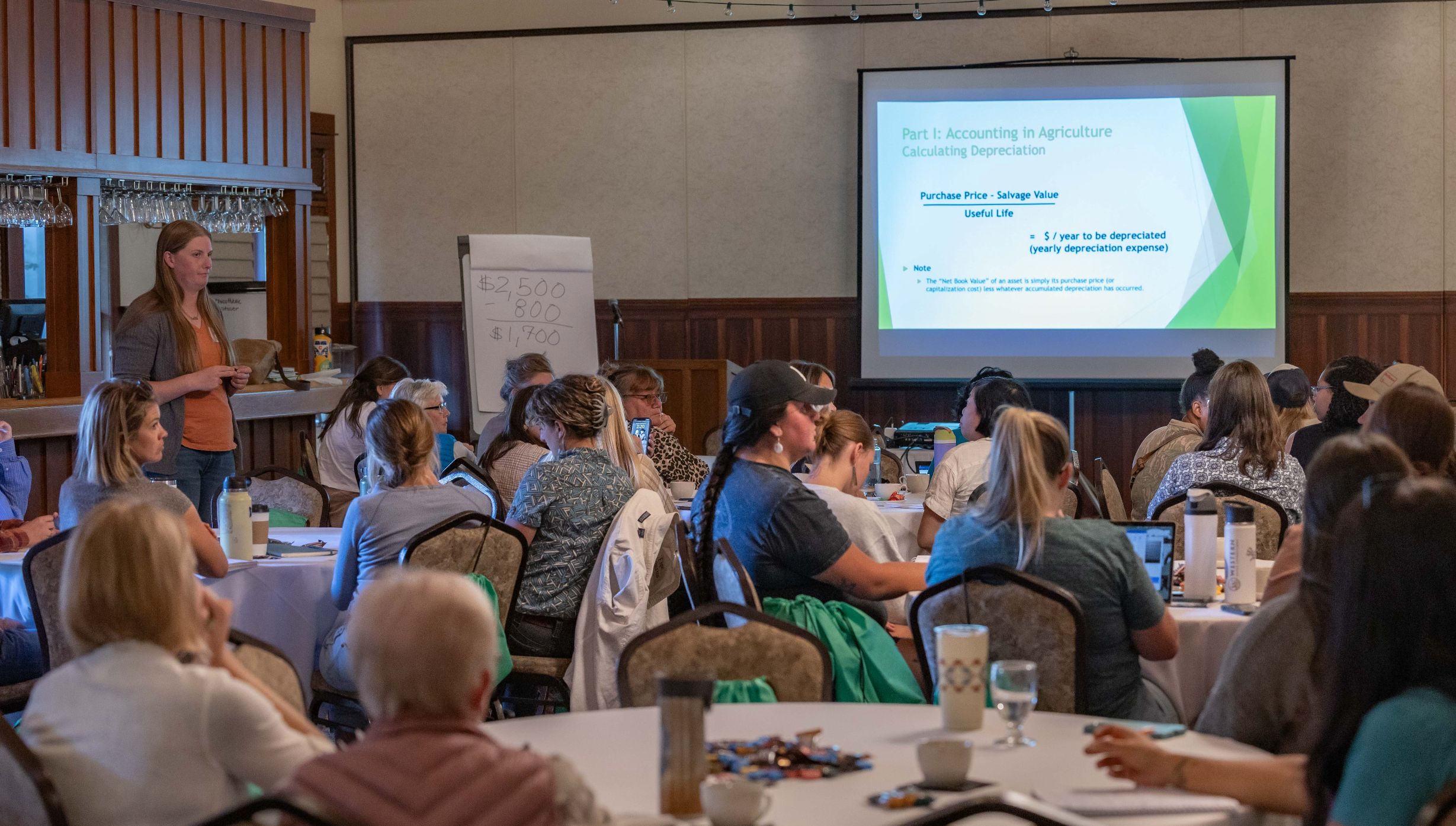
Learning Session: This week we will learn how to estimate capitalization costs for breeding livestock, how to salvage values and “useful lives” for each class of assets and how to tie all this information together to create an accurate asset list with accumulated depreciations for your asset usage. This will help you learn how to estimate depreciation costs when we are creating a budget.
Weekly Deliverable: You’ll build a spreadsheet in which to store a depreciation schedule for all your assets. You can use this schedule in your enterprise analysis or to estimate depreciation for budgeting.
Third Working Week
Meeting Dates:
- Accountability Working Session: February 18th - 6 to 8 PM MST
This week is designed without a learning session so you can spend more time categorizing your July 2025 and August 2025 transactions within your financial software. This may involve total categorization, fixing some transactions after adding or changing accounts last week, or simply adding enterprises to each transaction. You can do this on your own time, or join Caroline for an accountability working session where Caroline will be on camera, playing soft music, and other cohort members will be working toward the same goal as you!
Balance Sheets
Meeting Dates:
- Learning Session: February 23th - 12 to 1:30 PM MST
- Office Hours: February 25th - 6 to 8 PM MST
Learning Session: With last week’s homework assignment, we have laid the groundwork for a cost basis balance sheet. It can be hard to start with cost basis estimates, because oftentimes you are relying on your own numbers to determine your costs and you run into a bit of the chicken or egg question. Looking at past data, we can try to assess what a reasonable capitalization cost should be for livestock according to market reports and some common sense. This week we will also pivot and cover liabilities (loans) and why it is a good practice to reconcile loans as well as bank accounts on a regular basis.
Weekly Deliverable: You will create a market-basis balance sheet that you could use to present to a banker or loan officer, as well as a cost-basis balance sheet for you to work off of when you are making your own management decisions.
Tying It All Together: Performing an Analysis
Meeting Dates:
- Learning Session: March 2nd - 12 to 1:30 PM MST
- Office Hours: March 4th - 6 to 8 PM MST
Learning Session: In this session, we’ll work through how to do an analysis of an operation in order to calculate break-even prices. We’ll start by looking at an example month-by-month profit and loss statement that has been categorized. We’ll use the inventory flow we’ve created to determine allocation criteria and perform allocations. And we’ll add management depreciation amounts and then calculate break-even and determine which classes must be added as inventory, which must be capitalized, and which must be left on the profit and loss sheet. All steps that we have completed so far lead to this week!!
Weekly Deliverable: You will have access to the recorded session on how to perform an analysis, and hopefully by the end of the drop-in hours on Thursday, you should have an analysis of your 2026 books!
Tying It All Together: Forecasting
Meeting Dates:
- Learning Session 1: March 9th - 12 to 1:30 PM MST
- Office Hours: March 11th - 6 to 8 PM MST
Learning Session: All of the information that we have gathered and the analysis that we have performed can now be used to forecast your cash flow and profitability into 2028, as well as be used as benchmarking data throughout the rest of 2027. In this session we’ll work through creating a budget for next year, as well as benchmarking this year. We’ll take the overheads we have identified, estimate direct costs based on the inventory flow we created, and estimate depreciation expenses based on the depreciation schedule that we have created.
Weekly Deliverable: You will have access to the recorded session on how to use your analysis and data to forecast 2028 and benchmark 2027, and hopefully during the drop-in hours on Thursday, you can get a start on doing either of those tasks.
Cohort Cost
Women in Ranching is committed to making a portion of our programming accessible to all. However, hosting and facilitating our programs requires significant resources, and while we strive to keep financial barriers low, some events still come with notable costs. To ensure accessibility for everyone, while also ensuring we cover our true costs and ensure the sustainability of our organization, we offer a tiered payment option for this program.
Please take a moment to read through each tier and consider what is feasible for you at this time.

Meet your facilitator
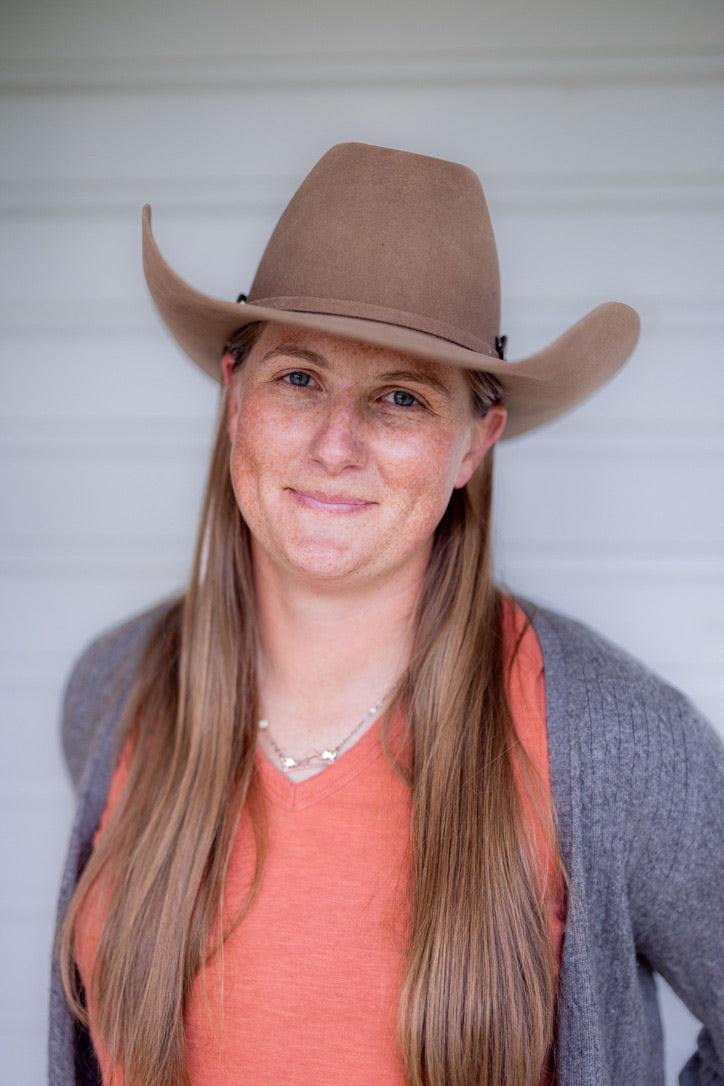
The cohort will be led by Caroline Wild, who brings years of experience facilitating Women in Ranching’s Virtual Ranch Management series. Through that work, as well as her personal business, Wild Ranch Solutions, Caroline has developed a deep, hands-on understanding of the challenges and opportunities facing women in ranching. She brings a thoughtful, grounded approach to helping individuals clarify their vision, commit to meaningful goals, and move toward them with purpose and support. Caroline has a bachelor’s degree in Livestock Management and Industry from Montana State University and a Master’s in Ranch Management from the King Ranch Institute for Ranch Management. From running the DNA department at the American Simmental Association to organizing pens of cattle at Headwaters Livestock Auction, Caroline learned to love problem-solving on the go. She has baled hay and fixed fences from north of Yellowstone up to the plains and breaks of Central Montana and served as a Ranch Systems Analyst for a large ranch in northern Wyoming and southern Montana. Based in Wyoming, Caroline takes on the world with her dog, Moxie, a frequent participant in her adventures, whether road-tripping obscene distances, hiking to alpine lakes, or devouring a book on the front porch.
Frequently Asked Questions
Does it matter what accounting software I am using?
No, not necessarily, but QuickBooks Online or Ambrook are going to be the best options for this cohort. Any version of Ambrook will work, whereas you will need at least the QuickBooks Plus level to get the “class feature,” which we will use. If you are using a different software package, feel free to reach out to Caroline to see if this software will work with this program.
If I am just starting out ranching / farming is this cohort for me?
Congratulations on getting started! While this cohort is not designed for beginning or aspiring ranchers / farmers, we will offer our Spring Virtual Ranch Management series starting March 24th and we encourage you to attend!
Are there scholarships available?
We offer a limited number of community-supported tickets to make this accessible to all. These tickets reflect our belief that everyone has something valuable to contribute, and cost should not be a barrier to connection, learning or leadership. If you wish to apply for a scholarship, please indicate so on the application and complete the required questions.
How much of a time commitment is this?
There will be 2-3 hours of group meetings per week, with the expectation that you will also have to complete 3-5 hours per week of individual work outside of our meetings times to be able to fully complete your annual analysis.
What will I get if I sign up for the cohort?
You will leave the cohort with a personalized chart of accounts, enterprise list, inventory flow, depreciation schedule and cost-basis balance sheet that can be used as templates for your operation in future years. If you keep up with categorization, you will also have the opportunity to complete a business analysis for that year.